Manufacturer · Yagud
Yadgud (Yagud) Walking Pad Models
Yadgud (often listed as Yagud) walking pads are designed for one core purpose: make indoor walking convenient—whether that’s getting steps during work, staying active in small apartments, or fitting light cardio into a busy day. The brand’s lineup can look confusing because many models appear similar at a glance and are sold under slightly different names, bundles, and feature callouts.
This page reviews the full range of Yadgud/Yagud walking pad models as they’re commonly sold: from ultra-slim under-desk pads to handlebar versions, incline variants, and “2-in-1” style units intended for both walking and light jogging. Rather than treating them as completely different machines, it’s more accurate (and more useful for shoppers) to evaluate them in the model families Yadgud/Yagud repeatedly releases.
Key takeaway: Across all models, the biggest differences are stability (handle or no handle), intensity (incline or not), and practicality (storage footprint vs comfort/deck room).
Photos below are the Amazon listing images for the Yagud pads linked on this page. A grade printed on a photo is the listing’s mark, not a grade measured for this site.
The “All Models” Breakdown (Yadgud/Yagud Model Families)
1) Ultra-Slim Under-Desk Walking Pad (No Handle)
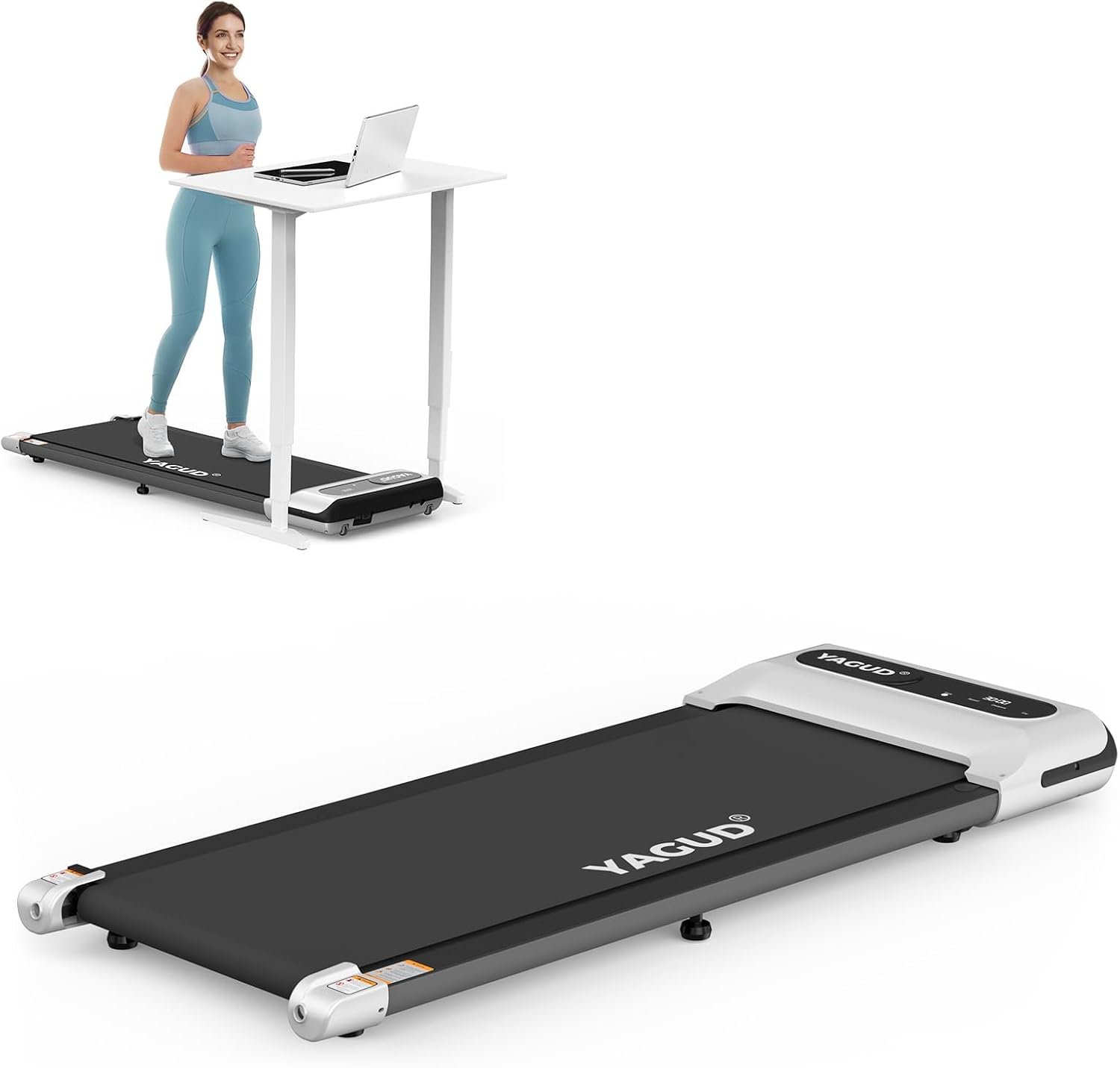
What it is
The simplest Yadgud/Yagud product type: a flat, low-profile walking pad built to slide under a standing desk and store under furniture.
Who it’s for
- Work-from-home users who want to walk during meetings
- Small-space users who need easy storage
- Step-goal focused walkers who don’t need advanced training features
Strengths
- Best under-desk compatibility: No upright frame blocking your desk space.
- Fast “grab-and-go” usage: Fewer parts means fewer setup steps and less visual clutter.
- Space efficiency: Typically the easiest to move and tuck away.
Weak points
- Least stable at higher speeds: It’s made for walking, not dynamic jogging.
- No hand support: If you rely on a handrail for balance or comfort, this style can feel exposed.
- Deck length limitations show up faster: Taller users and long striders notice the short deck sooner.
Verdict
This is the best Yadgud/Yagud model style for daily walking consistency. If your goal is “more steps” rather than “training,” this is usually the smartest pick.
2) Under-Desk Walking Pad With Basic Handle Bar (Stability Model)
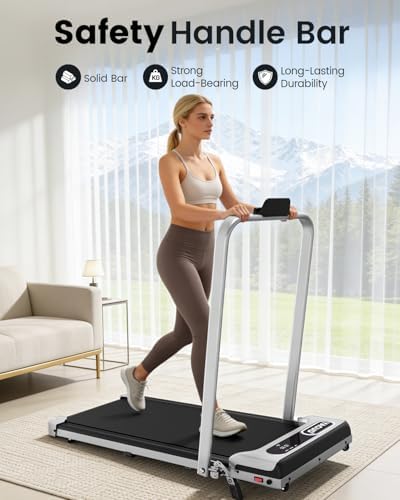
What it is
A walking pad with a fixed or simple upright handle to increase confidence and stability. Some versions still aim to be compact, but the handle changes storage and desk compatibility.
Who it’s for
- Beginners who want a safer-feeling platform
- Users who feel unsteady without something to hold
- People who walk briskly and want less wobble
Strengths
- More confidence at brisk speeds: The handle makes it easier to maintain pace.
- Better for longer sessions: Many users find posture and comfort improve when they can occasionally steady themselves.
- More “treadmill-like” feel: Psychologically, it feels closer to a standard treadmill.
Weak points
- Harder to store: Even if the handle folds, it usually adds bulk.
- Not automatically a running upgrade: A handle does not fix short deck length or lightweight frames.
- Desk use can be awkward: Some desks won’t clear the handle height.
Verdict
This is the best “middle ground” Yadgud/Yagud option for people who want walking comfort and stability more than ultra-slim storage.
3) Walking Pad With Handle Bar + Adjustable Incline (Intensity Model)
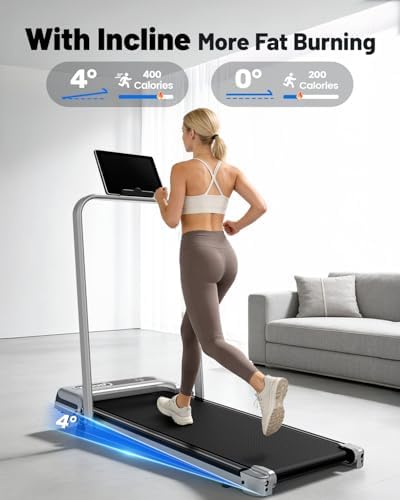
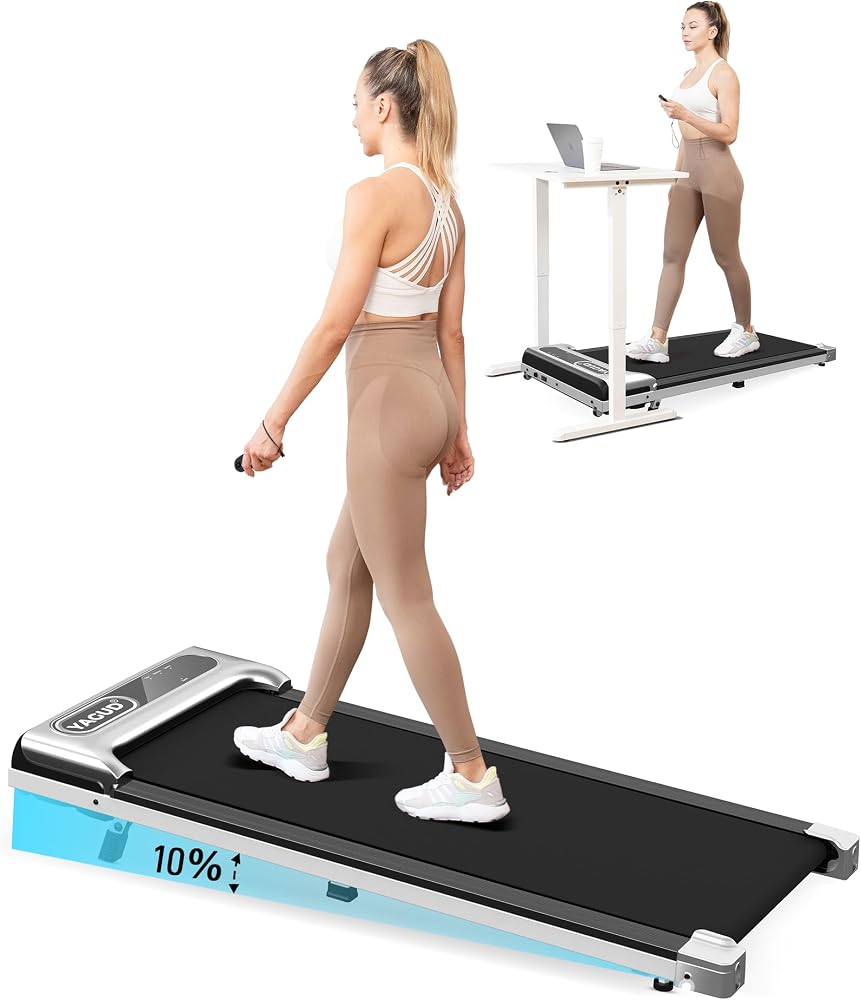
What it is
A handlebar walking pad that adds adjustable incline (often promoted heavily in listings). This is the most fitness-oriented Yadgud/Yagud style for people who want harder walking sessions without needing to run.
Who it’s for
- Walkers who want sweat-inducing workouts at low impact
- Users targeting glutes/hamstrings and higher heart rate
- Anyone who finds flat walking too easy but doesn’t want to jog
Strengths
- Incline is the real upgrade: Even a modest incline boosts training effect more than small increases in speed.
- Great for simple workout structure: You can do incline intervals without complex programming.
- Better perceived value: Buyers often feel incline models “do more” for the money.
Weak points
- Deck length can still be short: Incline doesn’t guarantee a longer belt; compactness remains the priority.
- More moving parts: More potential for squeaks, alignment issues, and the need for regular maintenance.
- Not ideal for under-desk use: Handle + incline makes it less “office stealth.”
Verdict
If your goal is fitness walking rather than just steps, this is the Yadgud/Yagud model family most likely to feel like a real workout tool. It’s the best pick for “I want results, but I don’t want to run.”
4) “2-in-1” Walking Pad / Jogging-Capable Variant (Speed-Focused Model)
What it is
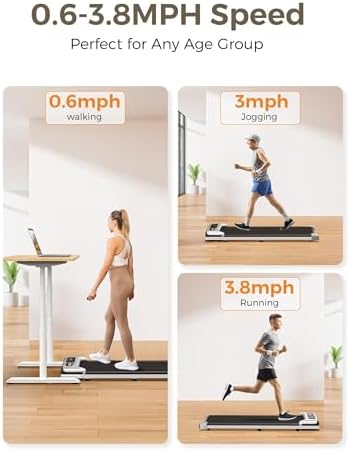
Some Yadgud/Yagud listings position the pad as suitable for walking and light jogging—often using “2-in-1” language or higher top-speed marketing. These are still compact units, but they attempt to stretch the use case beyond slow walking.
Who it’s for
- Users who want the option to jog occasionally
- People who don’t want to buy a full treadmill
- Households where one person walks and another wants a faster pace sometimes
Strengths
- More flexibility than a walking-only pad: The “ceiling” is higher for brisk walking and occasional jogging.
- Good for short intervals: Brief jog bursts can be doable if you’re comfortable with compact decks.
Weak points (important)
- Deck size is the limiting factor: Even with higher speed capability, compact pads can feel cramped for running stride.
- Stability at speed: Light frames can feel less planted when you move from walking to jogging.
- Heat/wear under harder use: Higher speeds and heavier footstrike increase belt/deck wear and make lubrication more critical.
Verdict
Treat jogging capability as a nice-to-have, not the main reason to buy. If you truly plan to run regularly, a larger treadmill is usually the better long-term decision.
5) “Smart / App / LED Display / Remote” Variants (Interface Bundles)
What it is
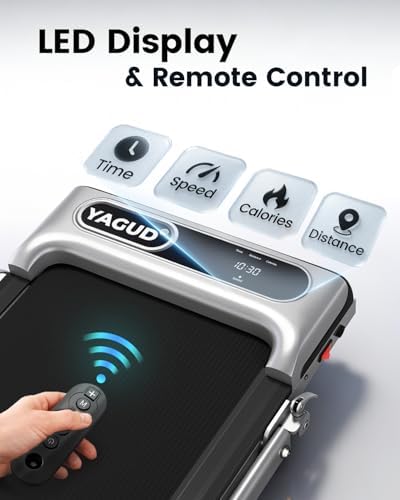
Across all the physical styles above, Yadgud/Yagud often releases versions differentiated by the “extras”: display type, remote design, app connectivity, workout modes, or a different console layout.
Who it’s for
- Users who like tracking steps/time/distance on-device
- People who want simple remote-based speed changes
- Buyers who want a slightly more modern look
Strengths
- Remote control is genuinely useful: Adjusting speed quickly is central to walking pad use.
- Displays help with consistency: Seeing time/distance can keep you walking longer.
Weak points
- Don’t overpay for “smart” features: Apps are often basic; the core value is still the walking hardware.
- Feature sets vary across listings: Two “similar” models may have different remotes, displays, or minor spec changes.
Verdict
Choose based on hardware fit first (deck size, handle, incline), then pick the interface bundle you prefer.
Performance Review (How the Lineup Feels in Real Use)
Walking comfort
Across the entire lineup, Yadgud/Yagud walking pads are generally at their best at:
- easy walking
- steady, moderate-paced walking
- brisk walking (especially with handle models)
Comfort is heavily influenced by belt size and your stride. If you’re tall or naturally take long steps, you’ll feel constrained sooner—particularly on ultra-slim models.
Stability and confidence
- Most stable: handle + incline models (usually heaviest and most “treadmill-like”)
- Middle: handle-only stability models
- Least stable (but most compact): no-handle under-desk pads
If you’re new to walking pads, a handle model often feels more forgiving.
Noise and apartment friendliness
Noise is typically acceptable for home use at walking speeds, but “quiet” depends more on your environment than claims on the box:
- Footstrike is often louder than the motor
- Hard flooring amplifies vibration
- A treadmill mat can dramatically reduce perceived noise
If you need “meeting-call quiet,” plan on slower speeds and softer stepping (and use a mat).
Running/jogging reality check
Even models marketed for jogging are still compact walking pads at heart. The main constraints:
- shorter deck length (limits stride)
- narrower belt width (less lateral margin)
- lighter frame (less planted at speed)
Occasional jogging can be fine for some users, but regular running training is not what this product category is built for.
Build Quality & Durability (What to Expect at This Price Tier)
Yadgud/Yagud is value-priced, and the durability story is usually tied to how you use it:
- For consistent walking sessions and good maintenance, these can hold up well.
- For frequent high-speed use, heavy stomping, or ignoring lubrication/alignment, any walking pad will wear faster.
The most important “durability feature” isn’t the marketing motor number—it’s:
- belt/deck lubrication habits
- keeping the belt centered
- using the pad on a stable, level surface
- not pushing compact units into full-treadmill workloads
Maintenance Guide (Applies to All Models)
If you want your Yadgud/Yagud walking pad to last:
Lubricate the belt regularly
This reduces friction, noise, and wear. It’s the #1 thing owners skip—and the #1 reason pads get loud or feel sluggish.
Check belt alignment
If the belt drifts left/right, correct it early to avoid edge wear.
Keep dust/pet hair under control
Build-up around the deck and motor area can increase noise and shorten life.
Use a mat
Helps with noise, vibration, and floor protection.
Stay realistic about speed
Walking pads last longer when used mainly for walking and brisk walking rather than constant top-speed sessions.
Model Selection: How to Pick the Right One (Simple Decision Tree)
Choose a no-handle under-desk model if:
- your #1 priority is walking while working
- you need the easiest storage solution
- you don’t require a handhold for comfort
Choose a handle model if:
- you want stability and confidence
- you’re a beginner or prefer a safer feel
- you plan longer brisk walking sessions
Choose a handle + incline model if:
- you want the biggest fitness improvement without running
- you like incline walking for intensity
- you don’t need under-desk clearance as much
Choose a “2-in-1” speed/jog variant if:
- you mostly walk but want occasional light jogging
- you understand deck size will limit running comfort
- you’re okay treating jogging as optional, not the main use
Who Should NOT Buy a Yadgud/Yagud Walking Pad
Look elsewhere if:
- you want to run frequently or train for races
- you need a long deck for tall stride length
- multiple household members will use it hard daily
- you want high incline ranges and structured console workouts like a gym treadmill
In those cases, a full-size treadmill will be more stable, more comfortable, and more durable.
Final Verdict (All Models Summary)
Viewed as a full lineup, Yadgud/Yagud walking pads are best at practical, affordable indoor walking. The flat under-desk models win on convenience and storage, the handle models win on stability, and the handle + incline models are the best option for people who want walking to feel like real training. The “jog-capable” variants can work for occasional light jogging, but deck size and frame stability keep the category fundamentally walking-first.